Home/Entomology/Chironomids

Entomology Guide

Chironomids

Chironomids are one of the most dependable stillwater food sources in British Columbia lakes. When trout are feeding consistently but not chasing hard, chironomids often explain the day. This page is built around the practical side: life cycle, depth control, line selection, casting setup, and the patient presentations that actually catch fish.
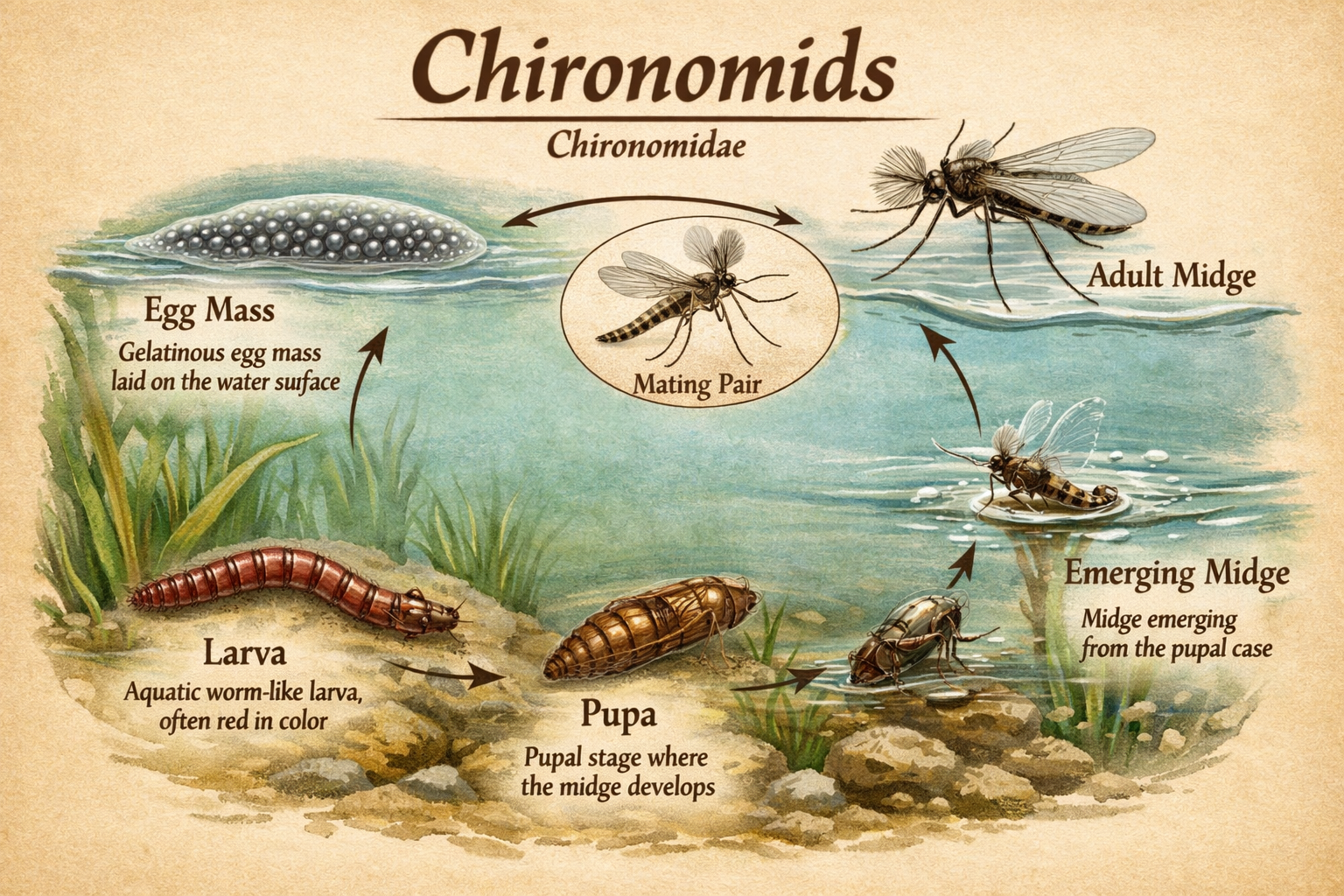
Chironomids stillwater entomology reference artwork
QUICK READ

Quick read

What matters most on the water

Chironomids fishing gets easier when you connect the insect's behaviour to your presentation choices. The cards below keep the main decisions tight and usable.

Primary Signal

Midges / Suspended pupa

Chironomids are one of the most dependable stillwater food sources in British Columbia lakes.

Best Water

Where trout usually intercept them

Basins, shoal edges, drop-offs, and any zone where trout can suspend comfortably at a repeatable depth.

LIFE CYCLE

Life cycle

Know the stage the trout are feeding on

Most missed stillwater opportunities come from fishing the wrong stage, not the wrong general bug.

  • Eggs are laid in the water and sink into the substrate or vegetation.
  • Larvae live in the mud and organic bottom material, where they feed and develop.
  • Pupae rise through the water column toward the surface, and that upward movement is what trout often key on hardest.
  • Adults emerge at the surface and the cycle begins again.
TACTICS

How to fish them

Line systems, casting approach, and retrieve

These are the practical decisions that usually matter most once you have identified the food source.

When

Best situations

  • Best during stable chironomid windows, especially when fish are showing suspended behaviour on shoals, drop-offs, and basins.
  • Most effective when you can identify a depth band and hold your flies there for long periods.
  • Particularly strong on calm to lightly rippled days when trout are cruising predictable lanes.
Line Weights + Lines

Rods and systems

  • 5 or 6 weight rods are ideal for balanced indicator work and long leaders.
  • Floating lines are the main system for indicators and suspended chironomid rigs.
  • Midge-tip or slow intermediate lines work when you want to fish pupa on a slow hand-twist without an indicator.
  • A second rod rigged with an intermediate line helps cover fish that are moving shallower than your indicator setup.
Casting

Presentation setup

  • Use smooth open-loop casts. Long leaders and small flies punish hard, punchy casting strokes.
  • Anchor your indicator rig with a measured leader so your flies hang at a repeatable depth.
  • Set your boat so you can cast slightly ahead of the wind drift and let the flies settle vertically.
Retrieve

Speed and movement

  • Under an indicator, the best retrieve is usually almost none. Let the flies hang and move naturally.
  • Add occasional tiny 1 to 2 inch lifts if you need to suggest a rising pupa.
  • On a naked pupa setup, use a very slow figure-eight or hand-twist retrieve and keep contact without speeding the fly out of the zone.
FIELD NOTES

Closing details

Most effective ways to actually catch fish on this food source

These are the small adjustments that usually turn follows and inspections into hooked trout.

  • Fish two flies when legal: a larger attractor pupa on top and a more exact imitation below.
  • Depth matters more than constant fly changes. Move a foot at a time until you contact fish.
  • When takes are soft, watch for stalls, dips, and slight slides in the indicator rather than dramatic pulls.

Field note: Use this page as a starting framework, then adjust depth, cadence, and fly size to the specific lake and the exact fish behaviour you are seeing that day.

BACK TO ENTOMOLOGY