Entomology Guide

Leeches

Leeches are the stillwater safety net for good reason. They are present in many lakes for long periods and they remain effective when there is no obvious hatch to key on. They are not as glamorous as a visible emergence, but they consistently save days.
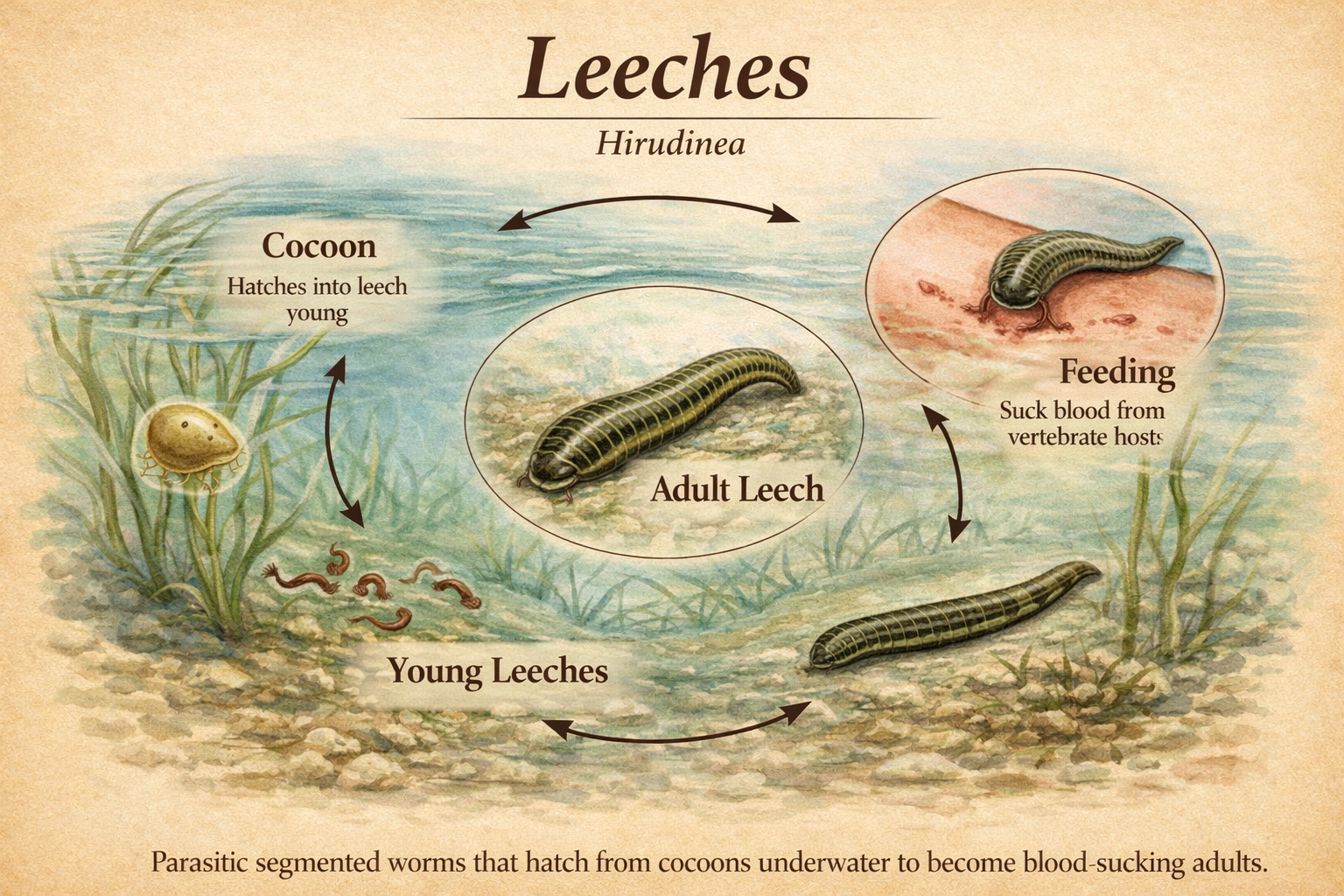
Leeches stillwater entomology reference artwork
QUICK READ

Quick read

What matters most on the water

Leeches fishing gets easier when you connect the insect's behaviour to your presentation choices. The cards below keep the main decisions tight and usable.

Primary Signal

Search pattern / Constant producer

Leeches are the stillwater safety net for good reason.

Best Water

Where trout usually intercept them

Weed edges, drop-offs, shoals, and transition bands where trout cruise when no hatch dominates.

LIFE CYCLE

Life cycle

Know the stage the trout are feeding on

Most missed stillwater opportunities come from fishing the wrong stage, not the wrong general bug.

  • Leeches are aquatic annelids rather than insects and remain available underwater throughout their life.
  • They move through weeds, mud, and structure where trout encounter them regularly.
  • Because they are common and substantial, trout often treat them as a reliable meal rather than a hatch-specific opportunity.
TACTICS

How to fish them

Line systems, casting approach, and retrieve

These are the practical decisions that usually matter most once you have identified the food source.

When

Best situations

  • Excellent whenever there is no strong hatch signal and you need a confidence pattern.
  • Strong in low light, chop, changing weather, and on lakes with healthy weed growth.
  • Useful for searching new water and finding the depth band fish are using.
Line Weights + Lines

Rods and systems

  • 6 weights are a strong all-around choice, especially with larger leech patterns.
  • Floating lines work with indicators, slip setups, and shallow presentations.
  • Intermediate lines are classic for leech fishing and cover a huge amount of water effectively.
  • Type 3 and type 5 lines come into play when fish are holding deeper or when you need to stay down in wind.
Casting

Presentation setup

  • Use fan casts to cover depth changes, shoals, and transition lines.
  • Let the fly reach the target zone before retrieving.
  • Track your countdown carefully so you can repeat the exact depth that produced.
Retrieve

Speed and movement

  • Leeches can be stripped slow, medium, or in pulses, which makes them excellent search flies.
  • Start with a steady hand-twist or 2 to 4 inch strip.
  • If fish are aggressive, increase strip length and speed; if they are neutral, slow down and lengthen pauses.
FIELD NOTES

Closing details

Most effective ways to actually catch fish on this food source

These are the small adjustments that usually turn follows and inspections into hooked trout.

  • Black, olive, maroon, and brown are core colours.
  • Balanced leeches can be deadly under indicators when fish are not willing to chase.
  • When in doubt, fish the leech before you overcomplicate the day.

Field note: Use this page as a starting framework, then adjust depth, cadence, and fly size to the specific lake and the exact fish behaviour you are seeing that day.

BACK TO ENTOMOLOGY